Apple's App for iPhone

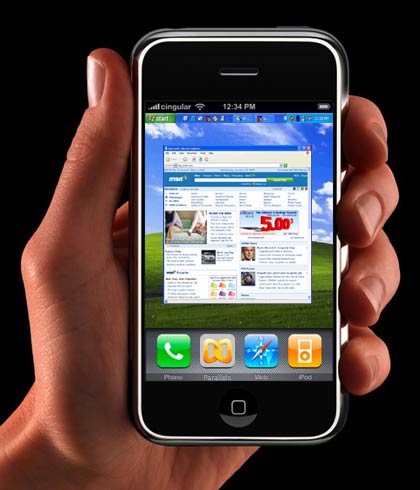
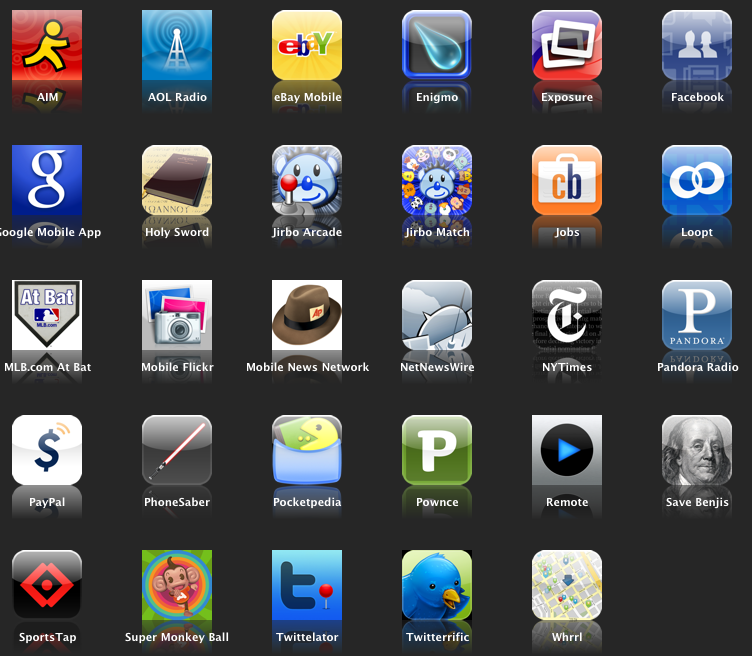
iPhone app is an application, usually developed by a company other than Apple, and specifically designed for use on an iPhone or iPod Touch. Apps work as user-installed software on a computer and allow the phone to perform certain tasks that the user wants or needs. Users sometimes pay a small fee to use an application that is downloaded directly to the phone. Apps can help make the iPhone and other smartphone devices must have for many people who want quick access to information.
iphone app iphone app
There are hundreds of thousands of applications available, ranging from maps and entertainment guides for business and money management. Many companies have developed iPhone apps for marketing purposes, such as grill manufacturer that provides recipes and grilling techniques, or a musician who creates games that tie in with their latest album. Magazines, newspapers, and websites also have their own product in the App Store that allows their content to be accessed easily on the phone. The game is very popular; app "Angry Birds", which started as an iPhone app in 2009, was so popular that it was adapted for other mobile platforms and has been downloaded at least 250 million times in mid-2011.

IPhone apps must be downloaded directly from the Apple iTunes store. Most are relatively inexpensive, and many are free. Other smart phones also have their own proprietary applications, so it is very important that the phone owner the right to download the phone.

iPhone, more like a Digital Camera?

When first saw the iPhone, people would think this gadget is not a cell phone. There is no keypad. No protruding objects typically found in mobile phones. Everything is trimmed flat. All seem neat, Elegant, Minimalist. There are no corners. Impressed iPhone is almost similar to a digital camera.
iphone
Steve Jobs, the creator of the iPhone, trying to present a new mobile phone. Not innovation, but rather creations. Not a follower, but a breakthrough or a breakthrough. Anything that is found in conventional cell phone is removed. In fact, the keyboard removed. Existing virtual or known by the touchscreen, Fingers do not have to press a button when sending a command. Simply touch, to save energy. Perhaps this is what Steve Jobs had in mind when creating the iPhone.

iPhone has several functions like cell phones in general. SMS, phone, media player, camera, voice mail, and so on. The function of a conventional cell phone is still maintained. Not removed. However, the iPhone has another advantage. The internet connection was a major weapon embedded in this phone so that users can perform a variety of activities in cyberspace. For example, mail, browsing, and downloading.
iphoneiphone

Advantages of the New Generation iPhone

the latest generation iPhone has been present in October 2010. With all its advantages, the iPhone is rumored to have a lot of deficiencies, in particular, the antenna signal and display. However, the news did not dampen the enthusiasm of fans to come to the iPhone outlets, when the product was launched.
iphoneiphone
One advantage of the iPhone 4 is the Facetime feature. This feature is similar to a video call. If on the PC, we know the webcam. You could say this is the video call feature a la iPhone with all the advantages of technology and the speed of data that can be conducted with an internet connection.

One of the advantages is the availability of the iPhone application very much and very diverse. More than 100 thousands of applications available in the Apps Store that is ready to be downloaded for free or purchased. Various applications are freely available, Provided that the capacity does not exceed 100 MB.
iphoneiphone
iPhone runs OS (Operating System) Mac OS. The operating system version is very light, Unlike the Mac computers in general. Many components are eliminated because it is not required. IPhone users can update the operating system on a regular basis through iTunes for free.

tablet pc


xoom 2 tablet
Ipad 2

 acer iconia

samsung galaxy tab 10.1
ASUS
 EEE Pad Transformer

 dell streak 7


 Dixons Vega Advent

 hewlett packard slate 500

 Mobile Demand xTablet T7000
 quadro QuadPad

 Neofonie WeTab

 
bModo12


 blackberry playbook


 LG Optimus Pad


 HTC Flyer


 Viewsonic ViewPad 7


The BlackBerry tablet

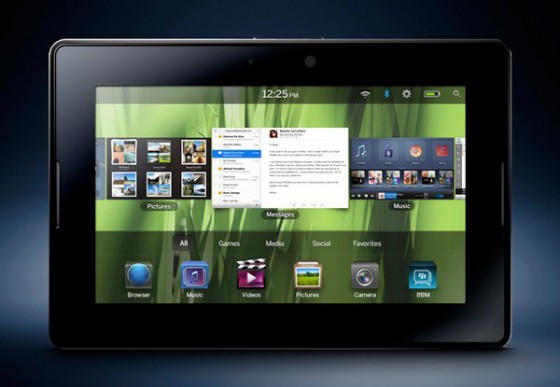
The BlackBerry tablet is here, and it looks astoundingly nice. Nicer than anybody expected it to be. Here's what you need to know about the PlayBook, in 10 easy steps.
The BlackBerry PlayBook Tablet: 10 Things You Need to Know

It's a 7-inch tablet with a 1024x600 screen that weighs 0.9 pounds

Meaning it's smaller and lighter than the iPad, with a more pixel-dense screen (i.e., text is gonna look cleaner and less pixel-y). It's a little bigger and heavier than the Samsung Galaxy Tab, on the other hand. (Then again, the Galaxy Tab looks more like a really big phone.)

It's running BlackBerry Tablet OS

As rumored, the BlackBerry PlayBook isn't running "BlackBerry 6," but the BlackBerry tablet OS, which is "powered by QNX technology." QNX is a software company RIM bought in April, whose software is used in products by Cisco and GE, among others. The OS is built on QNX's Neutrino microkernel.
It supports a whole bunch of standard platforms and technologies, like POSIX OS, SMP, Open GL, BlackBerry 6, WebKit, Java, Adobe Flash and AIR, along with RIM's new BlackBerry WebWorks platform. Apps written for WebWorks will run on BlackBerry 6 or the PlayBook, while Java makes it easier for developers to port Java-based BlackBerry 6 apps. Oh, and OpenGL means there's serious potential for graphically intense games.
It's got a tablet-optimized UI and multitasks out of the gate, unlike the iPad. And unlike Android, it has a nicer interface for navigating through applications, like a cross between webOS's cards and Apple's CoverFlow. It's got an onscreen keyboard for typing. The snippets of App World in the preview video look a lot like what you have on BlackBerry phones, a grid of tiles. The music player looks a bit like the iPod app on the iPad, but skinned in a slate color.

Dual-core 1GHz processor and 1GB RAM

That means it's got the horsepower to multitask, output 1080p video and run high-powered apps. The 1GB of RAM is particularly important for running applications in the background, and opening multiple tabs in the web browser, as iPad owners know from opening more than a few tabs in Safari and watching them get flushed as the iPad runs out of memory.

It's got "true" multitasking

By saying the PlayBook has "true" multitasking, RIM seems to be pointing at the fact that multitasking on the iPad is still limited in a lot of ways. Apps can't fully run in the background on the iPad like on a full computer, they can simply perform select actions, like playback audio or finish a download in a given amount of time. The implication is that the PlayBook will let things run willy nilly in the background, more like a standard BlackBerry phone.

"Flash-Loving," with Adobe Flash 10.1 and Adobe AIR built in

It runs Flash and AIR, which means Flash sites that don't work on the iPad will at least be viewable on the PlayBook. It'll be interesting to see how well Flash works on the PlayBook versus less powerful Android phones, where it can run into performance issues. AIR, on the other hand, opens the door for some app opportunities. Combined with the WebKit browser, it should be a pretty decent web experience.

Dual cameras with video conferencing and lots o' ports

This is swanky. The rear camera is a 5-megapixel shooter, while the front is three megapixels. From the back, it shoots video and from the front you can video chat.
It supports a handful of video formats—in 1080p—like h.264, WMV, DivX and MPEG, and it'll output video through a mini HDMI port. Also, it's got a standard micro USB port.

There's a Kindle App on the way

The PlayBook is more book-sized than the iPad, so fortunately a Kindle app for reading is already on the way, Amazon confirms. We're very excited about this.

Integrated with BlackBerry stuffs

It'll pair with a BlackBerry phone, so you can use the tablet to look at anything that's on the phone, like email, calendars or BBM without syncing the two. And it connects with BlackBerry Enterprise Server out of the box, along with all that entails.

It's coming out next year, but don't ask how much it costs

Specifically, RIM says it's coming out in the US in early 2011, with other places getting it sometime after March. There's gonna be 3G and 4G models in the future. RIM's not saying how much it's gonna cost yet, but since RIM loves the carriers, expect it to be offered through them for a discount. (In the preview video, it's mentioned that it works with existing BlackBerry smartphone data plans, so we'll see what that means.)
Overall, the PlayBook is a lot more exciting than anybody expected a BlackBerry tablet to be, especially given how thoroughly mediocre their last major product, the BlackBerry Torch, was. In fact, we're a little more amped about it than the Galaxy Tab. Now RIM's just gotta carry through the ball forward.
LG GD510

LG GD510 Unlocked GSM Quad-Band Cell Phone with 3MP camera, Touch Screen, MP3 Player, and Bluetooth--International Version with No Warranty (Silver)
The LG GD510, also known as the LG GD510 Pop(also called as Pep) , is a touchscreen mobile phone made by LG Electronics. It was first announced on September 30, 2009 and was released in October 2009.

General

* Form Factor: Touchscreen
* Dimensions: 97.8 × 49.5 × 11.2 mm
* Weight: 87 g
* Main Screen Type: TFT touchscreen, 256K colors
* Main Screen Size/Resolution: 240 x 400 pixels, 3.0 inches
* Messaging: SMS, MMS, Email
* Operating System: Flash UI
* Built-in Handsfree: Yes
* Voice-dial/memo: Yes
* Vibration: Yes
* Organiser: Yes
* Battery Stand-By: Up to 360 h
* Battery Talk Time: Up to 3 h 20 m

Connectivity

* 2G Network: GSM 850 / 900 / 1800 / 1900
* Bluetooth: Yes, v2.1 with A2DP
* USB: Yes, microUSB fh

Multimedia

* 3.15MP camera: 3.15 MP, 2048x1536 pixels, video(QVGA 15fps)
* Internal Memory: 45 MB shared memory
* Memory Slot: microSD, up to 8GB
* Games: Yes
* Music: MP3 player
* Radio: Yes
* Ringtones: Polyphonic, MP3
* Speakers: Built-in handsfree speakerphone

LG-GD900

LG GD900 Crystal Clear GSM Quad Band Phone Unlocked--International Version with No Warranty
the LG-GD900 is a fashion-focused slider with high end specifications phone from LG Electronics that was publicly unveiled at Mobile World Congress 2009. It is claimed to be the world’s first transparent design phone. It comes with a dedicated Bluetooth headset that is also transparent in parts.

The transparent part of the GD900 is the sliding keypad, which is designed to glow when in operation. The main casing material is metal and the phone is 13.4mm thick. LG decided to ship GD900 with a tempered glass keypad like a screen.

In terms of features, the phone supports 7.2 Mbit/s HSDPA and has a rear-mounted 8MP camera with flash. LG has released most of the phone's specification at the launch event in London on 28th of May. The GD900 is due to be released in mid-June in Germany, and in 40 other countries worldwide on the 1st of July. In the U.K. it will be exclusively available in the Carphonewarehouse.

MOTOSURF A3100

 Motorola Motosuf A3100 Solid Black Silicon Skin Case
The MOTOSURF A3100 is a Windows Mobile 6.1 smartphone with support for 3.5G data and wi-fi. The display is a 2.8" 240 x 320 pixel touchscreen - to put that into perspective, it is the same size as the non-touchscreen panel in the Nokia N95 8GB and Nokia N96.

Windows Mobile 6.1 Professional is a pretty familiar operating system these days but Motorola have enhanced the A3100 with a customisable home screen that can display RSS feeds, shortcuts, the weather, calendar events or one-touch access to social networking sites. The MOTOSURF can work with a stylus or finger on the touchscreen, or alternatively there's a rollerball mounted underneath the display.

On the back is a 3 megapixel camera with autofocus, plus a secondary VGA resolution camera on the front for video calling. It's not the greatest camera in the world, but for some reason Windows Mobile handsets suffer in this respect. It's certainly a better camera than the one on the iPhone, however.
As you would expect, the Motorola MOTOSURF A3100 also supports microSD expandable memory (up to 32GB), stereo Bluetooth 2.0 and USB 2.0. The MOTOSURF also comes with aGPS, so you can use it with your favourite personal navigation or mapping system.

Inside is some sort of Qualcomm MSM 7201A processor combined with 128MB RAM. Maximum talktime is quoted as 6.8 hours on GSM with up to 12 days standby time.
Inevitably, the MOTOSURF will end up being compared with the iPhone. One obvious difference between the two devices is the display - the 2.8" panel on the A3100 is significantly smaller than the 3.5" unit on the iPhone, but then the Motorola device is smaller and lighter than the Apple and altogether more pocket-friendly.

Palm Treo Pro

Palm Treo Pro Unlocked Phone with 2 MP Camera, 3G, Wi-Fi, GPS, and MicroSD--U.S. Version with Warranty (Black)
The Palm Treo Pro is a combination PDA/cell phone offered in both GSM and CDMA. It is Palm's fourth Windows Mobile Treo. It replaced the short-lived Sprint Treo 800w.
The phone originally was released in an unlocked GSM format. The updated release of the phone for CDMA networks featured new hardware specifications including a more powerful processor, more storage, and less user-available RAM.

    * Mobile phone, CDMA model with 800/1900-MHz bands, with EV-DO Rev.A data. Unlocked GSM model also available
    * Built-in GPS with both Assisted and Standalone modes
    * Qualcomm Dual-Core MSM7501A at 528MHz processor (400 MHz Qualcomm on GSM networks)
    * 300 MB user-available non-volatile storage (105 MB on GSM networks)
    * 128 MB DDR RAM (approximately 65 MB user-available on GSM, 45 MB user-available on CDMA)
    * Windows Mobile 6.1 Professional
    * 2.36 in (W) x 4.49 in (L) x 0.53 in (D)
    * 4.69 ounces
    * 320x320 TFT flush touchscreen display
    * Supports MicroSD and MicroSDHC cards up to 32 GB
    * Built-In Bluetooth 2.0 EDR with stereo support
    * 2 Megapixel digital camera
    * Built-in 802.11b/g Wi-Fi
    * 1500mAh Rechargeable Lithium-ion battery.
    * Infrared port
    * Current CDMA Firmware: Version 1.04

BlackBerry Storm

Blackberry Storm 9500 Unlocked Phone with 3.15 Mega pixel Camera (Black)
The BlackBerry Storm is a touchscreen  smartphone  developed by Research In Motion (RIM). A part of the BlackBerry 9500 series of phones, it is RIM's first touchscreen device, and its first without a physical keyboard. It features a touchscreen which reacts physically like a button via SurePress, a Research In Motion patented technology of providing haptic feedback. It is intended to be a direct competitor to Apple iPhone 3G, the Palm Pre, the T-Mobile G1 by HTC and the HTC Touch family.

The Storm has received mixed reviews from critics, with some finding the Storm's touchscreen difficult to use or discovering bugs and glitches with the phone's software, but some have praised the Storm for its call quality and its business-oriented features.

next:
BlackBerry Charging Pod for BlackBerry 9520 and BlackBerry Storm2
The BlackBerry Storm2 is RIM's second full-touchscreen  smartphone. Unlike the original Storm, the Storm2 features Wi-Fi as well as a redesigned outer shell.

The phone's codename throughout development was "Odin." The model number is 9520 for the GSM/UMTS/HSPA model offered by Vodafone and 9550 for the CDMA/EV-DO and UMTS/HSPA model offered by Verizon. The Storm2 comes with 2GB of on-board flash memory — 1GB more than the original — and is bundled with a 16GB microSD card (though not by Vodafone). The phone has been a reasonable commercial success.

When comparing the Storm2 with the original Storm, users find the Storm2 more user friendly. The new multi-touch screen allows users to type at a much faster pace- it has two finger recognition.

Research in Motion recently released specifications on the phone, reporting that 256 MB of RAM will be available for applications, doubling that of the original Storm. One major change is that the method of input, SurePress, has been redesigned. Instead of one physical button that lies in the direct center of the screen, the Storm2 has four piezoelectric sensors located on the four outer corners of the screen that allow for confirmation of input. The screen does not depress when the device is locked or off. It ships with the new BlackBerry 5.0 OS. The phone's SureType screen, which was heavily criticized on the original Storm, has been revamped and improved. The Storm2 also supports OpenGL ES

The HTC Dream / T-Mobile G1

 T-Mobile G1 Android Phone, Black (T-Mobile)
The HTC Dream (also marketed as T-Mobile G1 in the US and parts of Europe and Era G1 in Poland) is an Internet-enabled 3G smartphone  with an operating system designed by Google and hardware designed by HTC. It was the first phone to the market that uses the Android mobile device platform. The phone is part of an open standards effort of the Open Handset Alliance.

The HTC Dream was released in the US  on 22 October 2008; in the UK on 30 October 2008; and became available in other European countries including Austria, Netherlands, and the Czech Republic in early 2009. It was released in Germany in February 2009 with a QWERTZ keyboard and in France in March 2009 with an AZERTY keyboard. On 10 March 2009, it became available in Poland as Era G1 under a local mobile brand affiliated with T-Mobile.

As of 2008, in the US, it was priced starting at $129.99 for new and existing T-Mobile customers if purchased with a two-year T-Mobile voice and data plan, and $399 without a contract. Contrary to claims made by T-Mobile representatives, the handset does not need the data plan to work. The Dream comes in black, bronze (formerly called "brown"; except in the UK), or white.
On 23 April 2009, T-Mobile USA announced it had sold one million G1s since the device's launch.

On 5 February 2009, the phone was released through Optus in Australia, as the HTC Dream. On 21 February 2009, Singapore became the first country in Asia to introduce the phone. It was sold by SingTel between $38 – $238 under various contracts. Telefónica also launched a version of the phone in Spain on 20 April 2009 with slightly modified control buttons.

On June 2, 2009 it was released through Rogers Wireless in Canada as the HTC Dream. This variant, DREA210, supports the UMTS 850 / 1900 bands and HSDPA up to 7.2Mbps for use on Rogers' 3G network.

Sony Ericsson Satio

Sony Ericsson Satio (Red) SIM FREE / UnlockedSony Ericsson Satio (Idou) Quad-band Cell Phone - Unlocked
The Sony Ericsson Satio is a smartphone, announced by Sony Ericsson at the Mobile World Congress in Barcelona, Spain on 15 February 2009 as the Idou (pronounced "I do"). It was released on 7 October 2009 in the UK in 3 colour schemes: Black, Silver and Bordeaux (Red).

The focus of the phone is the high quality playback of music and video, as well as photography. The camera is located on the back of the phone, behind a slider and features a xenon flash. On the side of the phone, there is a shutter button, and a button which allows you to switch between still and video modes. Next to this is a rocker switch for zooming in and out. Also on this side is a button for playback of photos or video. The other side of the phone has a sliding lock button and a covered slot for a MicroSD card.

The front of the phone is dominated by a 3.5-inch, 16:9 ratio 360x640 TFT resistive touchscreen. There is also a front facing camera for video calling. At the bottom of the touchscreen are three small buttons: green (left), white (centre), and red (right).

In terms of software, Satio uses the Symbian OS 9.4 operating system, which is created collaboratively under the stewardship of the Symbian Foundation. It will use the PlayNow service, Sony Ericsson's mobile content platform, and is part of the company's new Entertainment Unlimited service. In terms of connectivity, it is Wi-Fi-enabled and has a GPS chip for navigation and location-based services. It also supports full Flash for video playback.

The phone was withdrawn from sale in November 2009 by two major British retailers due to complaints from customers. However, the problem was found only in UK editions of the phone and was probably caused by carrier-specific customizations. The following software update released by Sony Ericsson provided a fix and the phone was back for sale at those two retailers.